Why Does My V60 Coffee Taste Sour?
Why Does My V60 Coffee Taste Sour?
A sour V60 can be frustrating because the coffee may smell wonderful while tasting sharp, thin or noticeably acidic. In many cases, the brew simply has not extracted enough.
Acidity itself is not a defect. Good coffee can have pleasant fruit or citrus notes. The problem is an imbalance where the cup tastes dominated by sharp acidity without enough sweetness or body.
Start with grind size
Grind size is one of the easiest ways to change extraction.
If your V60 tastes sour and underdeveloped, a slightly finer grind may slow the flow and increase contact between water and coffee. Make a small adjustment rather than moving dramatically.
If the coffee becomes dry or bitter after grinding finer, you may have gone too far. The useful setting is the one that produces the balance you enjoy.
Water temperature affects extraction
Hotter water generally extracts more readily than cooler water.
If you are brewing with water that has cooled substantially before it reaches the coffee, try using freshly heated water. This can be particularly useful when the coffee is light roasted and benefits from a little more extraction.
Again, temperature is not an isolated rule. A finer grind, slower pour and hotter water can all push extraction in the same direction, so avoid changing all three at once.
Check the coffee to water ratio
A V60 can taste strong but still underdeveloped, or weak because there is simply too much water for the amount of coffee.
Use a scale and record both coffee dose and total water. This gives you a repeatable starting point.
If you like the strength of the drink but the flavor is sour, changing the ratio may not be the first adjustment. Grind size or water temperature may be more relevant.
Pouring technique matters
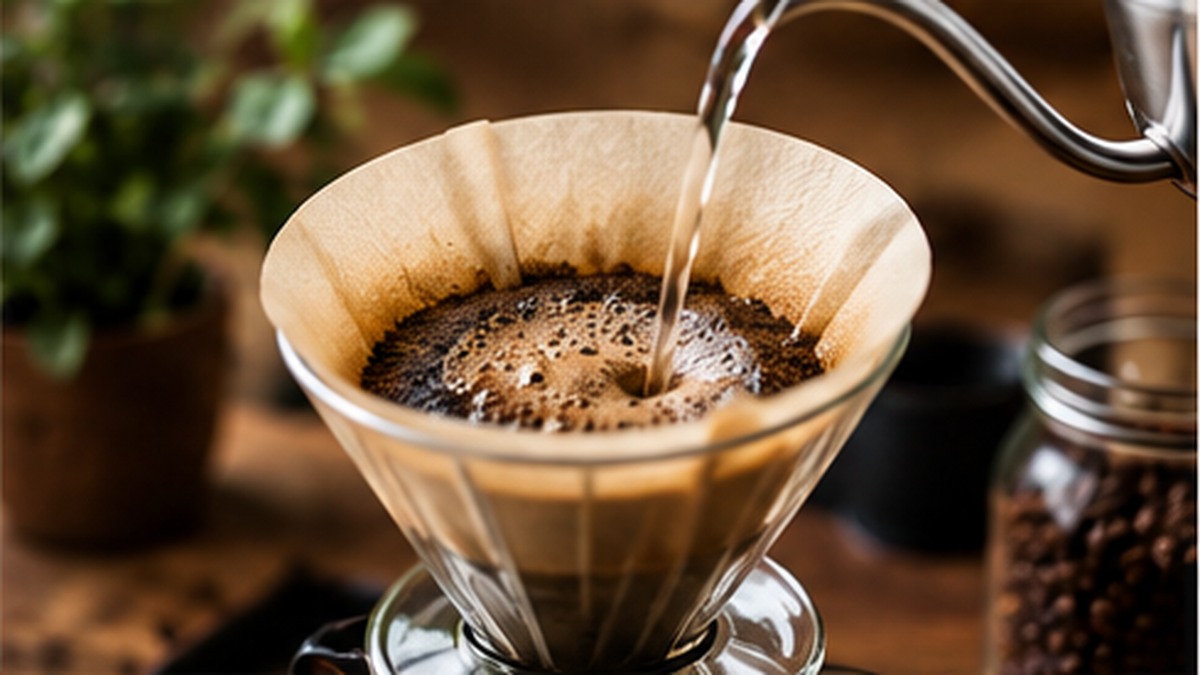
Pouring controls how the coffee bed is agitated and how quickly water passes through it.
A very aggressive pour can disturb the bed and change the flow. A very gentle pour may fail to wet the coffee evenly.
The goal is consistency. Pour enough to wet the grounds thoroughly during the early stage, then continue with controlled pours rather than constantly changing your pattern.
The filter and brewer are part of the system
Different paper filters can drain at different rates. Your pouring style, grind distribution and filter all interact.
If you change to a different paper and suddenly the brew becomes much faster or slower, that is useful information. You do not necessarily need to compensate with several other changes immediately.
Keep your equipment consistent while dialing in a coffee.
A simple troubleshooting sequence
Start with your existing recipe. If the coffee is clearly sour and thin, make the grind slightly finer.
If that does not help, review water temperature. Then check whether the pour is evenly wetting the bed.
Only after those variables are understood should you make larger changes to the coffee to water ratio.
This approach makes the process less frustrating because every brew teaches you something.
Remember the coffee itself
Some coffees are naturally bright. A washed Ethiopian coffee may taste very different from a chocolatey Brazilian coffee even when brewed with the same recipe.
The objective is not to remove acidity completely. The objective is to create enough sweetness and structure that the acidity feels balanced.
Practical checklist
For sour V60 coffee, ask:
- Is the grind too coarse?
- Is the brewing water cool?
- Is the coffee to water ratio appropriate?
- Is the coffee bed being evenly wetted?
- Did you recently change filters?
- Is the coffee naturally high in acidity?
Make one adjustment and taste again. With pour over, consistency is often more valuable than chasing a universal recipe.
Related reading
If you are unsure whether your grinder is producing a consistent particle distribution, read Why Does My Coffee Grinder Produce So Many Fine Grounds?. You can also explore the Pour Over category.